October 26, 2026 - How One Patient-First Hero Helped Me Say Goodbye to TPN and My PICC Line
Posted on October 26, 2026
If you’ve ever had a PICC line or been on TPN (Total Parenteral Nutrition), you know that taking care of it becomes a central part of your daily routine. The bags, the pump, the weekly dressing changes, the careful monitoring—it’s a constant reminder of a tough medical journey. So when the day finally comes that you no longer need TPN, it feels like a massive milestone.
I was ready to celebrate. TPN was finished, and it was time for my PICC line to come out. Morgan, the nurse who had been attending to me, wanted to remove the PICC line but could not get autherization at the moment.
Little did I know, getting that line removed would turn into a confusing medical maze—and the person who would ultimately save the day wasn't who I expected.
Lost in the Healthcare Shuffle
Once my TPN ended, Option Care Health—the home infusion provider that had been delivering my supplies and changing my dressing every week—officially discharged me from their home care services. My oncologist at MD Anderson provided the necessary orders to have my PICC line removed at an outside clinic near home so I wouldn't have to make the long drive to the main hospital complex in Houston.
That sounded simple enough, right? **Wrong.**
I started calling local outpatient clinics and medical facilities in my area, only to hit wall after wall. No one would provide the service. Frustrated, I called MD Anderson to ask if I could just pop into their regional satellite clinic in The Woodlands to have it removed locally. The answer? “We’ll have to get back to you next week.”
I was stuck in healthcare limbo. I had a line sitting in my arm that no longer served a purpose, no active home care nurse, and no clinic willing or scheduled to pull it out.
An Unexpected Lifeline
Then came a phone call that changed everything.
The pharmacist, Don, from Option Care called me to confirm that the infusion pump I had returned was safely back in their hands, officializing my discharge. During the call, he asked a simple, routine question:
"Who is going to be doing your dressing changes or removing your PICC line now?"
I poured out my frustration and explained my situation—how I was calling everywhere, getting turned away, and facing a week of waiting just to hear back about an appointment.
Instead of saying, "I'm sorry, but you're no longer our patient," this pharmacist chose to step up. He listened, recognized my distress, and decided to take action. He told me he would see what he could do and make a few calls.
Two Minutes to Freedom
Sure enough, on Friday, October 16th, the nurse, Morgan, from the local Option Care clinic called me. The pharmacist had advocated for me behind the scenes, and they set an appointment for me to come directly into their clinic on Monday at noon.
When Monday arrived, I walked into the clinic feeling a mix of anxiety and overwhelming hope.
Do you know how long it actually took to remove the line? All of two minutes.Two minutes! After days of phone calls, dead ends, and stress, the physical procedure was over in the blink of an eye. After a standard 15-minute observation period to ensure everything was fine, I was cleared to leave.
Closing That Chapter
Walking out of the clinic that day, the relief was indescribable. It was finally official: No more TPN. No more PICC line.
Navigating the healthcare system can often feel isolating, especially when you're caught between different providers, clinics, and administrative red tape. But this experience reminded me of the incredible power of empathetic healthcare workers. That Option Care pharmacist didn't have to go out of his way for a patient who was technically already discharged—but he did it anyway.
To anyone out there currently dealing with lines, pumps, and complex care: hang in there. And to the healthcare workers who look beyond the paperwork to truly advocate for their patients—thank you. You make all the difference in the world.
October 16: Transitioning Off TPN: Overcoming PICC Line Hurdles and Finding My New Normal
Posted on October 16th, 2026
One of my recent milestones in this cancer journey has been discontinuing Total Parenteral Nutrition (TPN). As of today, I've been off TPN for about three weeks.
For months, TPN was an important part of keeping me nourished when eating enough food was difficult. While I'm grateful it was available when I needed it, reaching
the point where I no longer require intravenous nutrition feels like real progress.
The challenge now is replacing those calories and proteins through normal eating.
Learning to Eat Again
Since stopping TPN, I've been carefully tracking everything I eat. My goal is simple: make sure I'm consuming enough calories and protein to maintain or increase my weight without relying on intravenous nutrition.
To help accomplish this, I've been building my own nutrition tracking system that records:
Daily calorie intake
Daily protein intake
Body weight
Food tolerance
Foods that consistently work well for me
Tracking this information has helped me identify foods that provide the best combination of calories, protein, and digestibility.
Some days are easier than others, but each day I remain off TPN is another step toward greater independence.
An Unexpected Problem
While discontinuing TPN was good news, it created a problem I wasn't expecting.
My TPN was provided through Option Care, and they were also performing my weekly PICC line dressing changes.
The moment I informed them that I no longer needed TPN, my services were immediately discontinued.
That left me in a difficult position.
I still have a PICC line in my arm, but suddenly no one was available to provide dressing changes or remove the line.
Fortunately, my doctor at MD Anderson provided an order for PICC line removal at an outside clinic. Now the challenge is finding a facility willing and able to perform the procedure.
The $10,000 PICC Line
This isn't even my first PICC line.
The original PICC line was placed at MD Anderson in June. Despite being secured with sutures, it gradually migrated outward over time.
During a routine dressing change at Option Care, the nurse discovered how far it had moved and ended up removing the remainder of the line. A dressing was placed over the site, and I suddenly needed a replacement.
On August 24th, I went to Memorial Hermann's emergency room to have another PICC line inserted.
What surprised me was the process.
I arrived around 11:30 in the morning and waited until approximately 5:00 PM for the physician who performed the procedure. I was told the doctor was traveling between hospitals and would come when available.
The actual PICC line insertion took roughly twenty minutes.
The bill?
Approximately $10,000.
It's one of those experiences that makes you wonder how healthcare costs can become so disconnected from the amount of time involved in a procedure.
From Triple Lumen to Double Lumen
The replacement PICC line inserted at Memorial Hermann was a double-lumen catheter.
My previous line had been a much larger triple-lumen PICC, which looked impressive but also served as a reminder of how dependent I had become on intravenous nutrition and medications.
Today, that double-lumen PICC is no longer being used.
What was once a lifeline has become a reminder of how far I've come.
Now I just need to find someone willing to remove it.
Looking Forward
Stopping TPN doesn't mean the journey is over.
Now comes the work of maintaining nutrition the old-fashioned way: one meal, one snack, and one protein shake at a time.
I'm continuing to monitor calories, protein intake, weight trends, and food tolerance closely.
The goal isn't just to stay off TPN.
The goal is to thrive without it.
And if I can finally get this unused PICC line removed, that'll be one more step toward putting this chapter behind me.
October 1, 2026 - First Blog Update
Posted on October 1, 2026
Welcome to my treatment updates page. I'll be sharing
news about my medical journey, treatment progress,
challenges, victories, and messages of gratitude here.
Thank you to everyone supporting me with prayers,
encouragement, and donations. Your support means more
than words can express.
August - Meeting With My Care Team
Posted on August 25, 2026
Title: Facing the Reality of Uninsured Cancer Care: My Visit to MD Anderson Katy
Navigating a cancer diagnosis is hard enough on its own, but navigating it without insurance adss an entirelydiffernt layer of frustration and stress. On August 25th, I had an appointment with my surgical oncologist, doctor Naruhiko Ikoma, at MD Anderson's Katy location. The facility itself is incredible--a brand-new, modern building that feels state-of-theart. But, because the visit was classified as an in-clinic appointment, the visit had to be paid for upfront out of pocket. Before I could step into an exam room I had to pay over $1,100.
After going through the standard routine--checking vitals and filling out the health questionaire--the doctor came in to speak with me. After a brief discussion of the treatment plan--chemotherapy, CT scans, and surgery, dotor Ikoma advised me that I would not be able to afford the upcoming chemotherap, CT scans, and surgery without insurance or financial assistance. The majoity of the conversation was focused on how I would pay for futher treatment.
It's a jarring experience to walk into a world-class cancer centerlooking for a medical path forward and leving after paying over eleven-hundred dollars just to discuss the financial hurdles standing in the way of care.
I'm currently assessing all available options, financial assistance programs, and Market Place insurance to get the care I need. Thank you to everyone who has been reaching out, sending support, and keeping me in their thoughts. I will keep you updated as I work through the next steps.
August 14: The Backpack,The Living Room Clinic, and the 12-Hour Tether
Posted on August 20th, 2026
On August 14th, I was officially discharged from MD Anderson in Houston, Texas. For Sixty straight days, my existence had been outsourced to professionals. When you spend two months in a hospitalyou become a passive recipient of care. Nurses bathe you. Nurses measure your vitals. Nurses administer your medications, stick needles in your skin, and hang heavy baggs of Total Parental Nutrition (TPN), the specialized, Life sustaining nutritionan IV solution that bypasses my dysfunctional digestive tract entirely and goes straight into my bloodstream. In a hospital, you are the project; they are the managers.
And then, suddenly they hand you a stack of papers, open the door, and wish you luck.
The transition from passive patiet to primary clinician is a sharp, terrifying shock to the system. The moment I walk through the door at my home, the the administrative and physical reality of my new life collided. I wasn't just returning home to manage my own complex medical needs; I was returning to my role as the primary caregiver for my wife. She is a disabled veteran, wheelchair-bound after a stroke, battling severe COPD, and requiring constant, vigilant care. In the hospital, I had a button to press for help. At home, I was the button.
Our living room was instantly converted into a surreal, miniature outpatient clinic. My brother, Peter, left for the local pharmacy to pick up my Enoxaparin (generic Lovenox), the blood thinner I now had to inject into my own abdomen twice a day to prevent deadly clots. Meanwhile, a delivery driver arrived and began stacking heavy cardboard boxes in our living space. Inside, packed tightly under layers of sweating Arctic Ice freezer packs, were my TPN bags and an overwhelming mountain of sterile tubing, flushes, alcohol pads, and a pump.
The learning curve was vertical. I had to master the meticulous, obsessive ritual of sterile technique—scrubbing my hands, prepping the workspace, and hooking the IV fluids directly into my PICC line without introducing a single microscopic speck of bacteria into my bloodstream. The TPN fluid connects to a small, computerized pump. The whole apparatus—the heavy, cold liquid bag and the electronic pump—is arranged inside a specialized backpack
For twelve hours every single day, from exactly 8:00 PM to 8:00 AM, I am entirely tethered to this machinery.
Because I had been laid up in a hospital bed for so long, my muscles had atrophied, leaving me dependent on a rolling walker just to navigate our home. I quickly learned to adapt: I place the heavy TPN backpack onto the built-in seat of my walker. It relieves the weight on my back, but it doesn't change the fundamental geometry of my nights. For twelve hours, the walker, the pump, the backpack, and I are a single, locked unit.
Between the strict 12-hour TPN schedule, the morning-and-night Enoxaparin shots, and the constant needs of my wife, our home has a new, rigid rhythm. It is exhausting, and it is a massive responsibility—but it is the baseline of our survival now, organized one sterile syringe and one rolling step at a time.
Thank you all for standing beside me during this
journey.
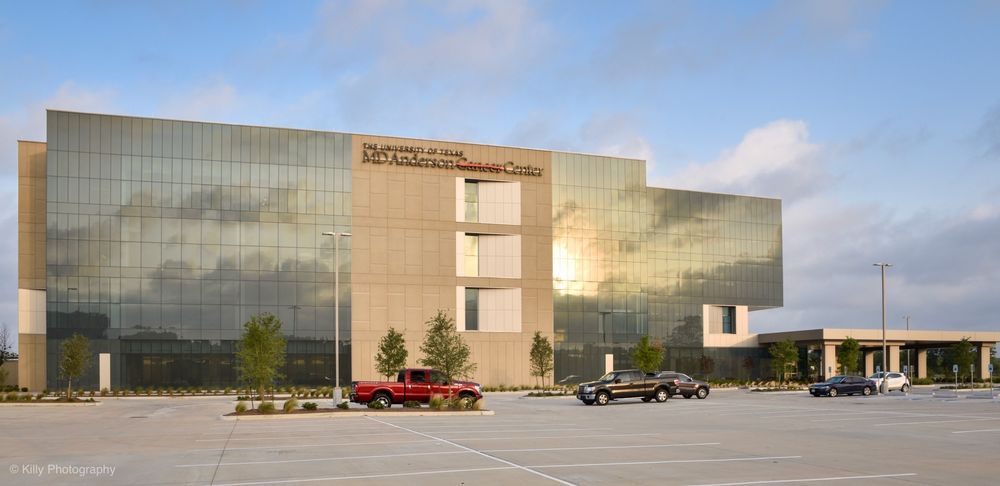 The facility itself is incredible--a brand-new, modern building that feels state-of-theart. But, because the visit was classified as an in-clinic appointment, the visit had to be paid for upfront out of pocket. Before I could step into an exam room I had to pay over $1,100.